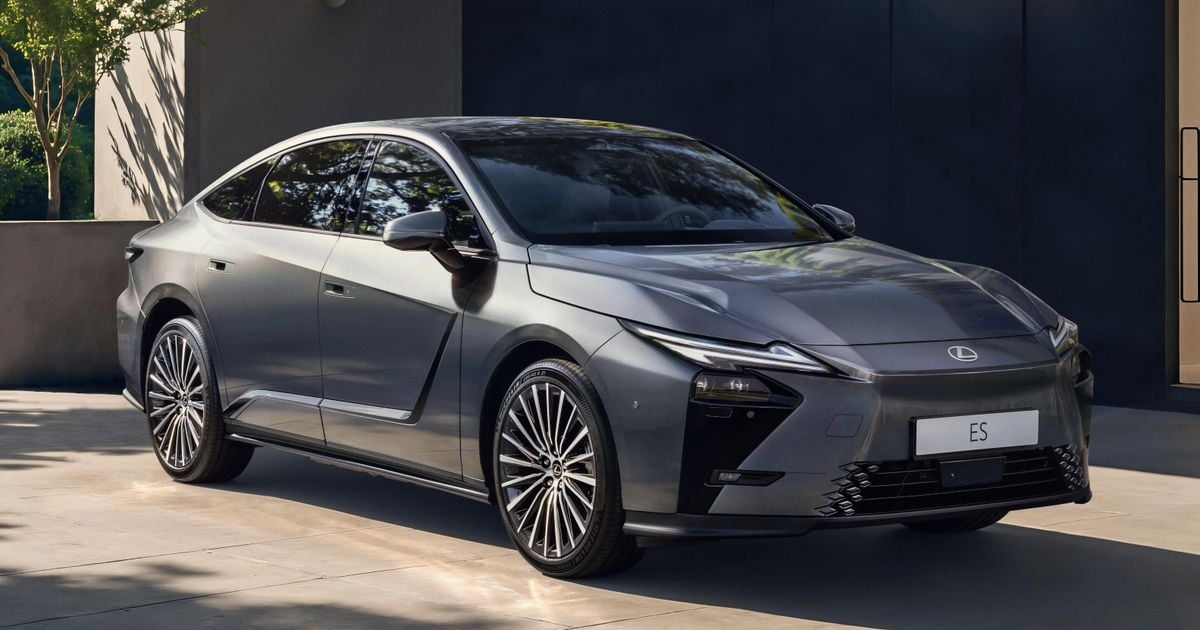
The eighth-generation Lexus ES made its debut at the 2025 Shanghai motor show last April, and after being confirmed for a 2026 local launch we now have more specific timing.
Lexus Australia has confirmed the new ES sedan, which will be offered with electric power for the first time, is due to arrive here during the third quarter (July to September) of 2026. Pricing and specifications are expected to be announced closer to launch.
The electric ES will be one of just two electric vehicles (EVs) offered by the Japanese luxury brand in Australia, following last year’s axing of the UX300e small SUV, and will sit alongside the RZ mid-size SUV which recently received significant upgrades and price cuts.
The hybrid ES sedan, in contrast, will sit among a wide range of hybrid models in Lexus showrooms, including the LBX and UX small SUVs, NX mid-size SUV, RX large SUV, LM people mover and LS flagship sedan. A hybrid version of the flagship LX off-road SUV is also locked in for Australia, while the LC500h hybrid coupe remains on price lists for now.
CarExpert can save you thousands on a new car. Click here to get a great deal.
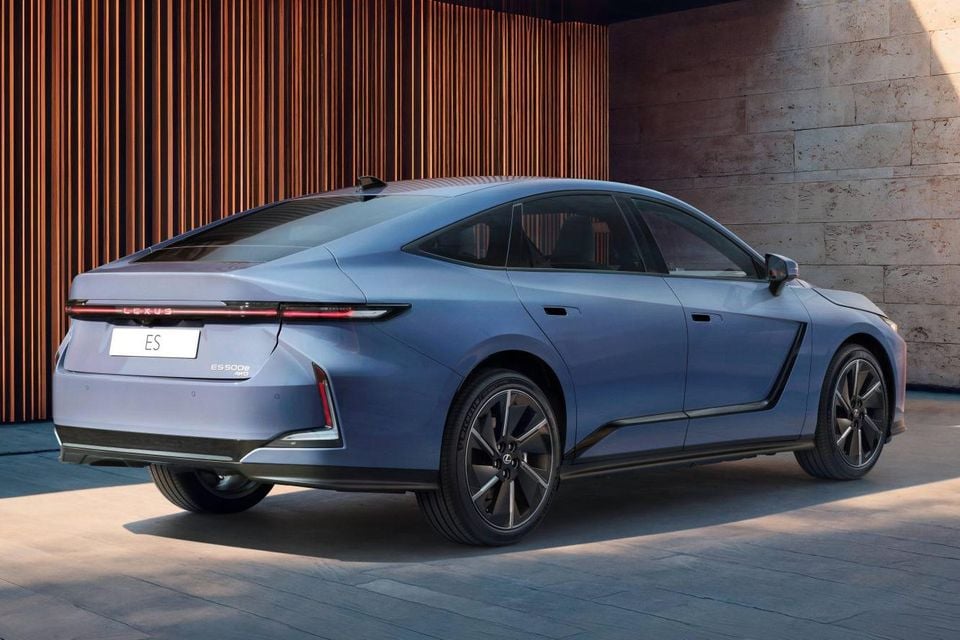
The ES will be one of just two sedans in Lexus Australia’s lineup, at least for the time being, as the LS limousine has an uncertain future given it’s towards the end of its lifecycle and was recently axed in the US.
The eighth-generation model will be the sixth generation of ES to be offered in Australia, with 13,365 ES sedans delivered between its launch in 1992 and the end of 2025, including 7350 hybrids.
Larger than the mid-size model it replaces, the new ES rides on a “newly developed” version of the TNGA GA-K platform, which also underpins the Lexus NX and RX SUVs, and the Toyota Camry.
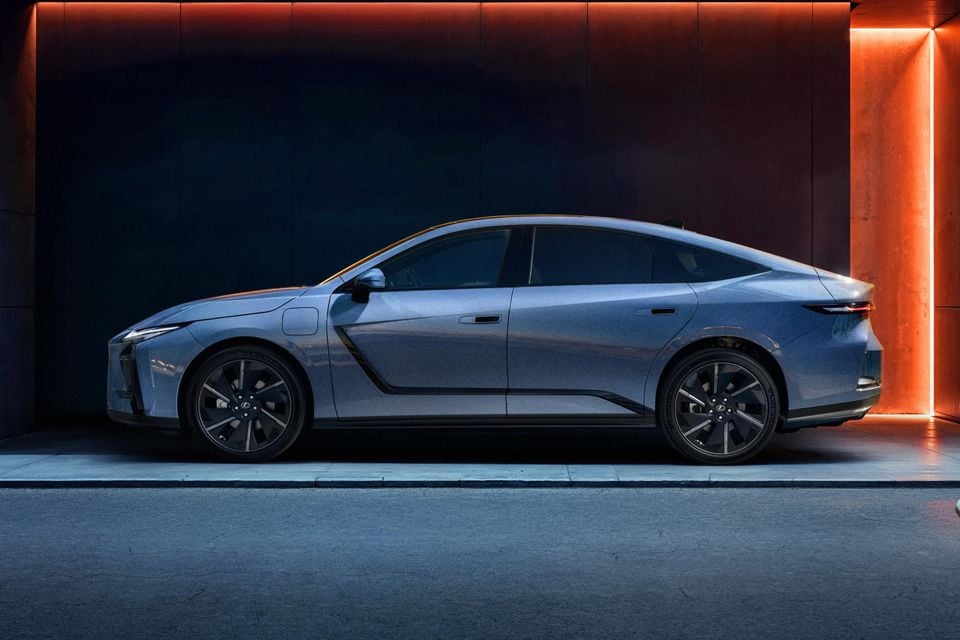
Riding on an 80mm longer (2950mm) wheelbase, which also eclipses the 2835mm wheelbase of the Camry, the Mk8 Lexus ES is a whole 165mm longer overall than its predecessor and measures 5140mm long. It’s also 55mm wider at 1920mm and 110mm taller at 1555mm.
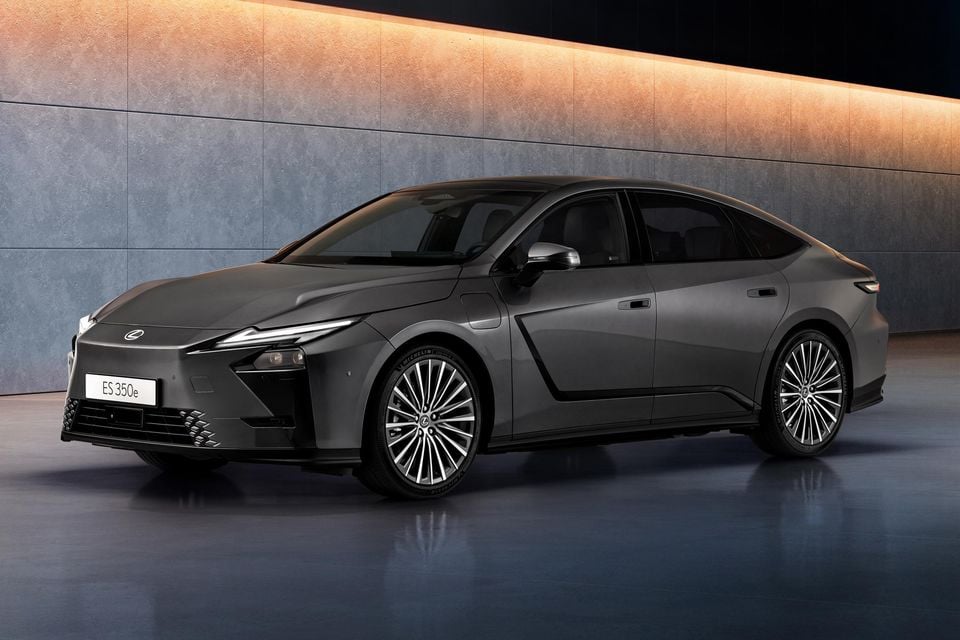
Lexus Australia has confirmed that both hybrid and electric versions of the new ES will be offered here in 2026, but it’s still yet to detail the local lineup, including whether there’ll be any all-wheel drive hybrid variants, which would be a first for the ES Down Under.
There are two hybrid powertrains, both of which use an electronic continuously variable automatic transmission (e-CVT) and offer a choice of front- or all-wheel drive.
The ES300h is now powered by a 2.0-litre four-cylinder petrol-electric powertrain with a total output of 148kW, good for a claimed 0-100km/h time of 8.2 seconds with front-wheel drive and 8.0 seconds with all-wheel drive.
The ES350h features an upgraded 2.5-litre four-cylinder petrol-electric powertrain with a total output of 182kW, reducing claimed 0-100km/h times to 7.7 seconds (FWD) and 7.5 seconds (AWD).
Lexus says the hybrid ES benefits from a larger but unspecified battery and an integrated eAxle that combines the power control unit and transaxle.
The new ES will be the first electric sedan from Lexus (and its parent company Toyota) to be sold outside of China, where Toyota sells the small bZ3 sedan, and where a second facelift for the existing ES was released late last year.
Lexus says it anticipates a maximum range of 530km on the WLTP cycle for the battery-powered ES.
The ES350e is available only with front-wheel drive and a 77kWh lithium-ion battery, and produces 165kW of power – good for a claimed 0-100km/h time of 8.9 seconds.
The ES500e features a 75kWh battery but a dual-motor all-wheel drive powertrain with a total output of 252kW and a claimed 0-100km/h time of 5.7 seconds.
Unusually, Lexus’ US division says these two powertrains share the same 74.7kWh battery, while its European and UK counterparts specify different 77kWh and 75kWh capaciites.
Regardless, the ES EV can be charged from 10-80 per cent in 30 minutes using a 150kW DC fast-charger with an outside air temperature of 25°C.
Electric ES sedans will be offered with the choice of 19- or 21-inch alloy wheels, while the largest wheel size on the hybrid is 19 inches.
Lexus says that by unlocking the full potential of the TNGA GA-K platform, it was able to position the large-capacity battery beneath the floor to lower the centre of gravity and enhance vehicle stability.
The ES500e goes a step further with its DIRECT4 all-wheel drive system, which uses wheel speed, acceleration and steering angle data to continuously control front-rear torque distribution between 100:0 and 0:100 per cent, thereby improving standing-start acceleration, handling and energy efficiency.
For the first time in an ES, there’s multi-link rear suspension to go with the MacPherson front struts.
There’s also a rear-wheel steering system called Dynamic Rear Steering (DRS), which can turn the rear wheels by up to four degrees – in the opposite direction to the front wheels to improve agility at low speeds and in the same direction to enhance stability at higher speeds.
Also aiding dynamics as well as comfort and refinement is increased chassis rigidity, sound-insulating door glass, improved sealing components, and the option of Adaptive Variable Suspension (AVS), which uses a linear solenoid system to adjust damping force.
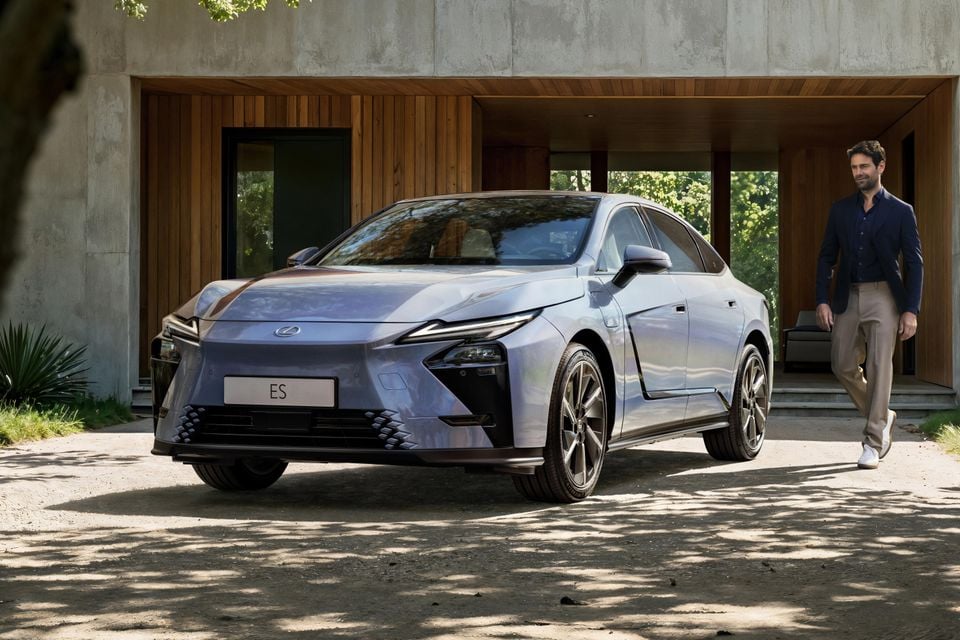
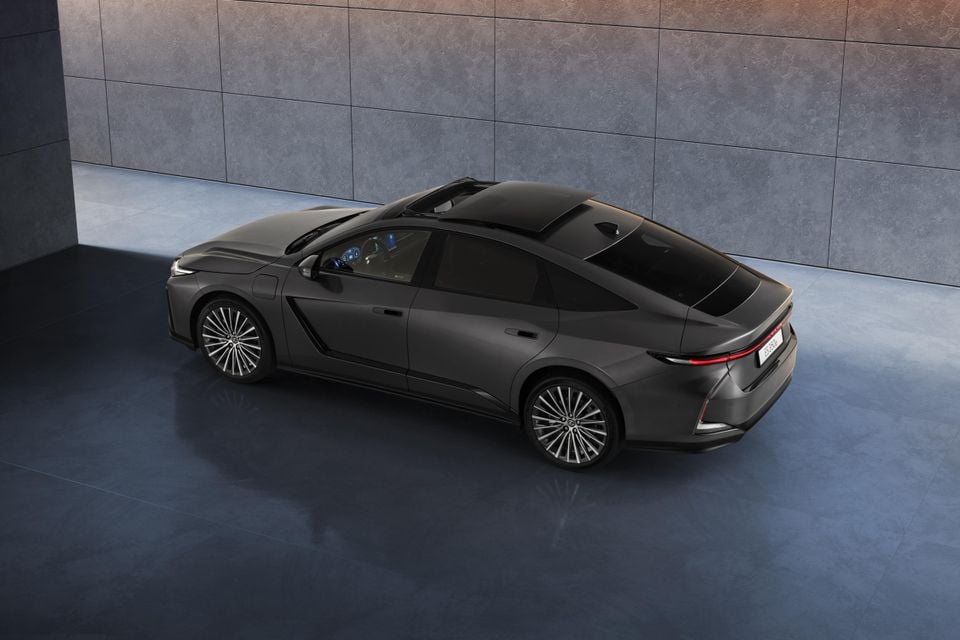
Highlights of the new ‘refined minimalism’ exterior design, previewed by the 2023 LF-ZC electric sedan concept, include a slim version of Lexus’ spindle grille for petrol models and a closed-off version for EV variants, flanked by slender new ‘L-Signature’ headlights and tail-lights, a rear lighting strip with Lexus logo and flush door handles.
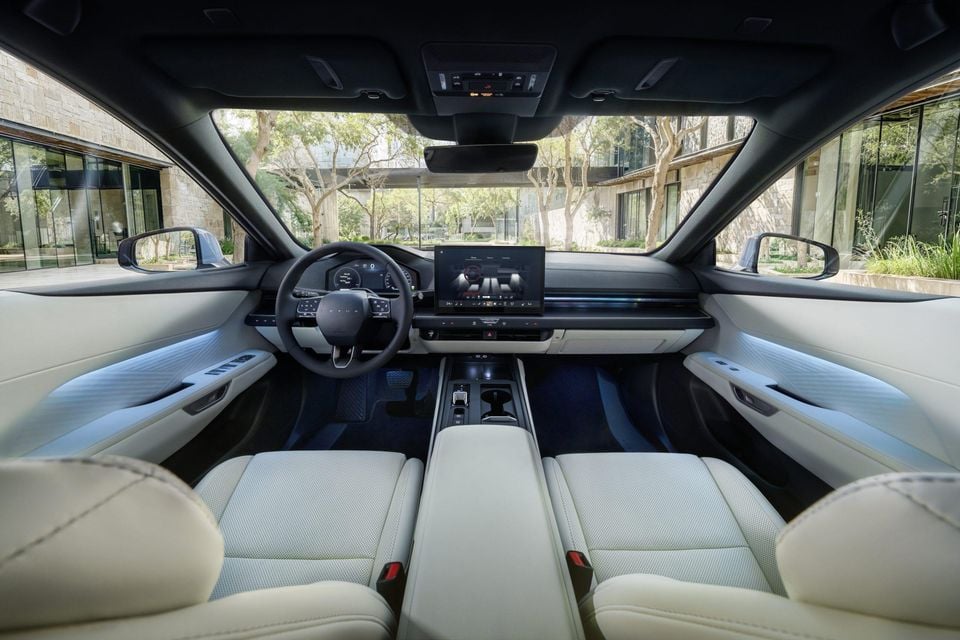
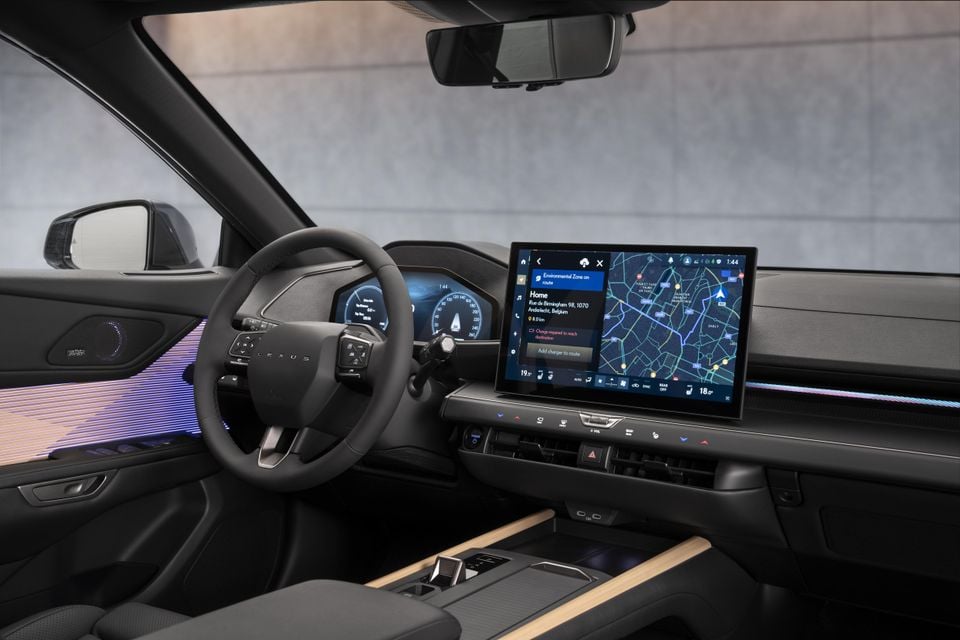
Inside, the new ES eschews physical controls for a cleaner dashboard with fewer buttons, highlighted by a larger floating-style 14-inch infotainment touchscreen, backed by the first application of Toyota’s next-generation ‘Arene’ software platform.
There’s a 12.3-inch digital instrument cluster, dual wireless phone chargers, and capacitive shortcut buttons that illuminate when your hand approaches them. Lexus claims the ‘Responsive Hidden Switches’ will be a world-first.
Lexus has also previewed a larger touchscreen that incorporates a display for the passenger.
Also new is an optional Sensory Concierge system that “orchestrates” the ambient lighting, climate and fragrance according to the music playing, plus a wider panoramic sunroof with heat insulation, thermal protection and 99 per cent ultraviolet light reduction.
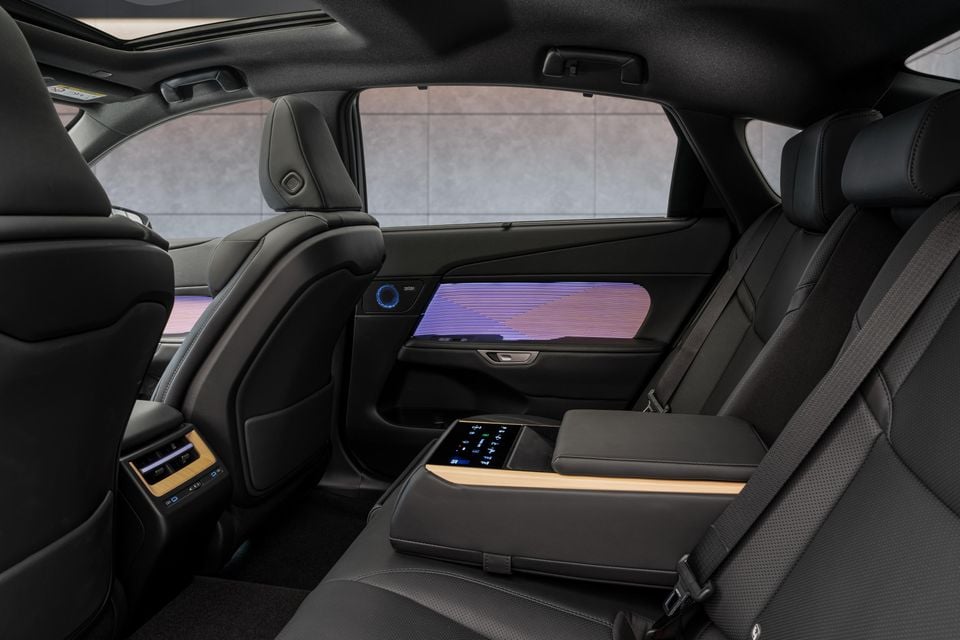
Rear passengers will also have the option of reclining seats, an ottoman, a massage function employing air bladders, and even a front passenger seat that folds fully forward to increase legroom.
The new ES will also debut the Toyota premium brand’s next-generation advanced driver-assistance system (ADAS), which will employ more sensors to deliver a wider field of view from longer distances, with more details still to come.
Lexus International chief engineer Kohei Chiashi said the new ES will bring new levels of refinement, quietness and ride comfort.
“The new ES marks the beginning of the next generation of Lexus and delivers a truly refined experience. It was developed with the aim of redefining the sedan,” he said.
“With the newly developed TNGA GA-K platform, the new ES supports both HEV and BEV powertrains, offering a wider range of electrified vehicle choices while contributing to the realisation of a carbon-neutral society.”