Are automakers leaving some demographics behind?
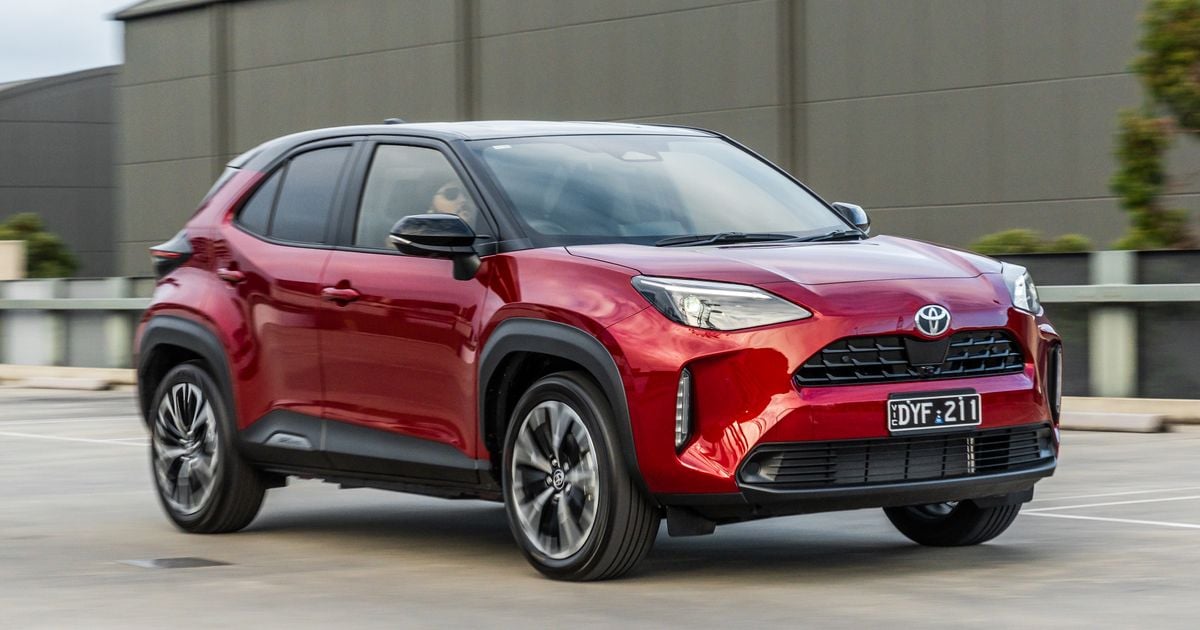
This is the question that kept running through my mind as I drove the 2026 Toyota Yaris Cross Urban 2WD – a relatively simple, small hybrid SUV, but one that could appeal to a lot of Australians.
As vehicles become more technologically advanced – and automakers are under greater pressure from intensifying competition – automakers seem to be elbowing each other out to release models that look like IMAX cinemas on wheels.
But the Yaris Cross is different, and it could be one of the smartest cars in Toyota’s range. Not in terms of its technology, but in terms of company strategy.
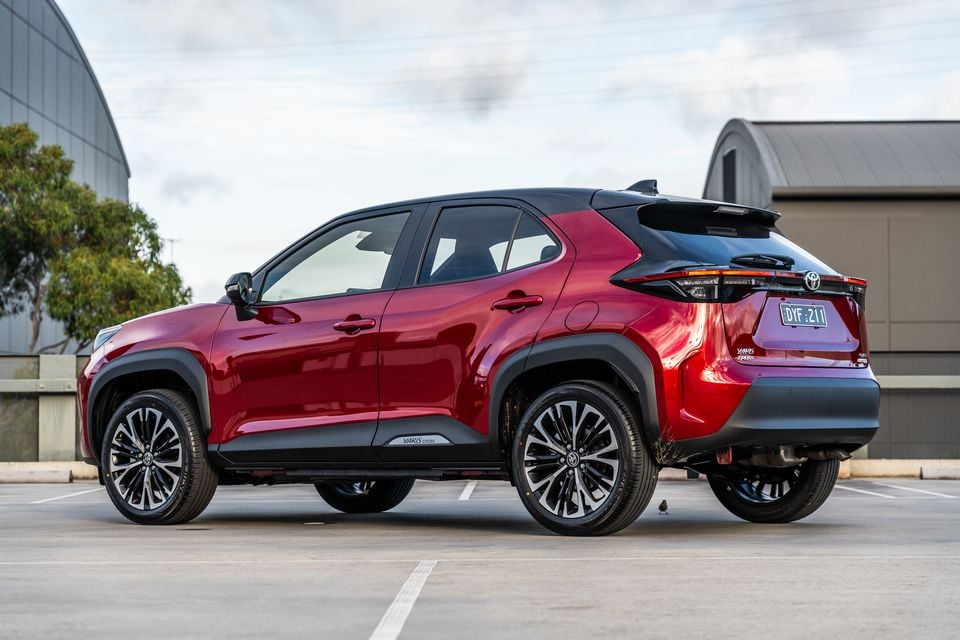
The Yaris Cross is a city-sized SUV, which is to say it’s more or less a high-riding version of the compact Yaris hatchback.
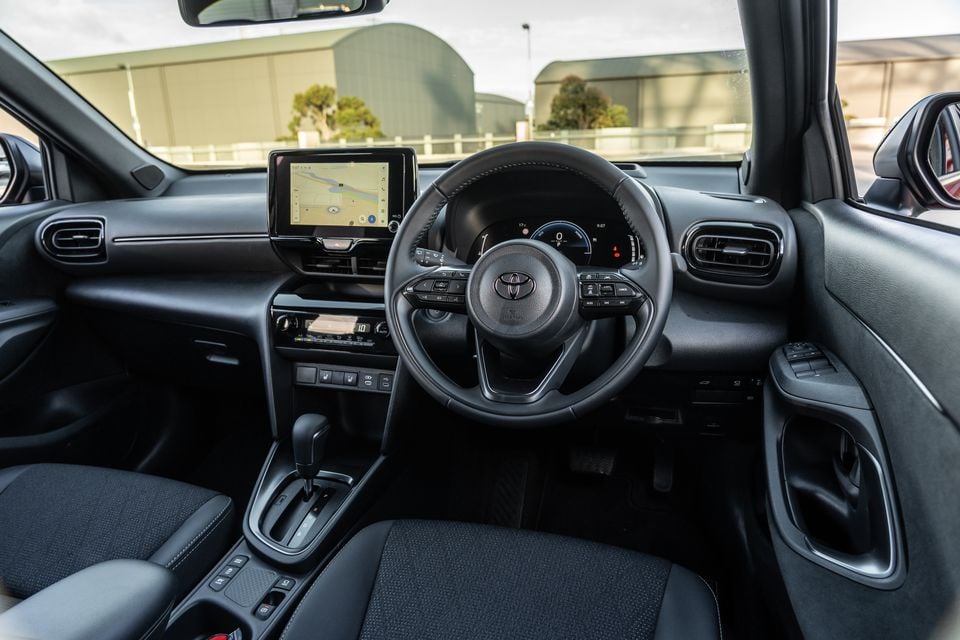
This one is the Urban grade, which means it’s positioned above the base GX and the mid-range GXL, but – given this is the front-wheel drive variant – below the GR Sport and the all-wheel drive Urban.
And, as with all of Toyota’s passenger cars now, it comes with a hybrid powertrain – utilising a small battery and electric motor to add power and therefore reduce fuel consumption from the three-cylinder petrol engine.
Spec-wise, there’s nothing really special about the Yaris Cross Urban. It has some nice additions, but there really isn’t anything you could point to as a standout feature.
And yet, that may be part of its genius.
How much does the Toyota Yaris Cross cost?
The Toyota Yaris Cross is priced from $31,790 before on-road costs for the GX 2WD, with the range topping out at $39,930 plus on-roads for the Urban AWD.
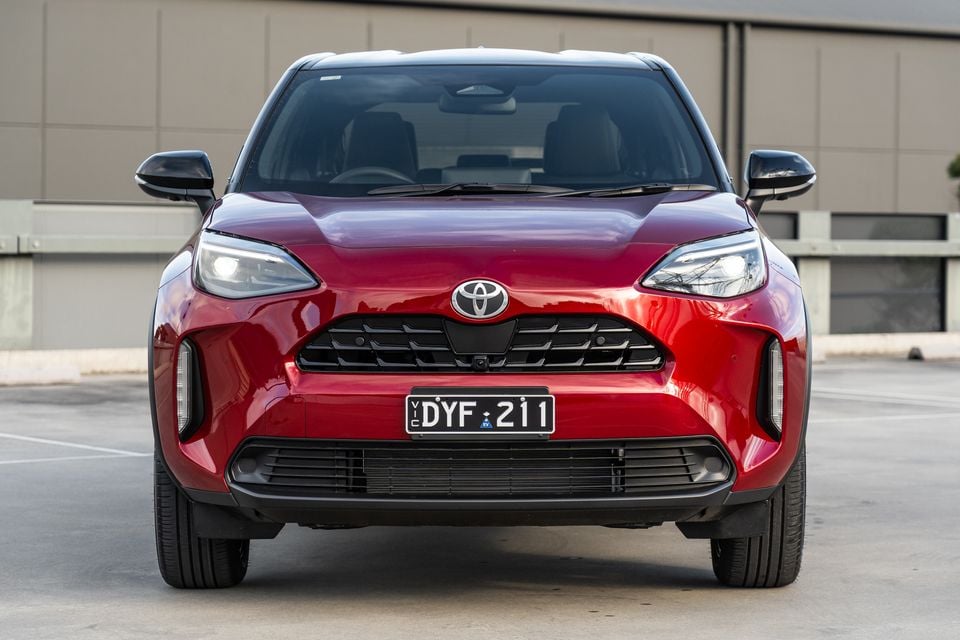
| Model | Price before on-road costs |
|---|---|
| 2026 Toyota Yaris Cross GX 2WD | $31,790 |
| 2026 Toyota Yaris Cross GXL 2WD | $33,990 |
| 2026 Toyota Yaris Cross GX AWD | $34,790 |
| 2026 Toyota Yaris Cross Urban 2WD | $36,930 |
| 2026 Toyota Yaris Cross GXL AWD | $36,990 |
| 2026 Toyota Yaris Cross GR Sport 2WD | $36,990 |
| 2026 Toyota Yaris Cross Urban AWD | $39,930 |
On test here is the Yaris Cross Urban 2WD, available from $36,930 before on-road costs.
Find your perfect new car with CarExpert
Buyers have quite a bit of choice in this price range, but the SUV Light segment leader remains the Mazda CX-3, while the Kia Stonic and Hyundai Venue remain popular options among buyers.
To see how the Toyota Yaris Cross lines up against the competition, check out our comparison tool
What is the Toyota Yaris Cross like on the inside?
Toyota’s Yaris Cross takes the concept of a city-sized hatch, and makes it more accessible.
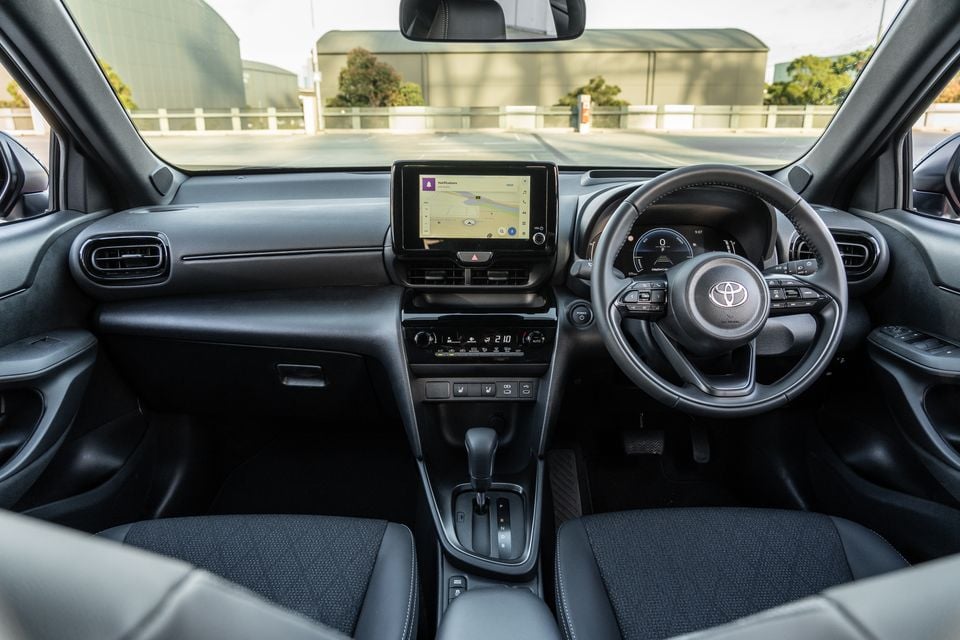
While slightly longer, wider, and taller overall, the dimensions of the Yaris Cross aren’t wildly different to the Yaris hatch on which it’s based – but because the car is raised up, getting in and out is a breeze.
Upholstered in fabric and leatherette, the heated front seats also have some height – further improving both ingress and egress and contributing to good ergonomics. They’re also comfortable and offer a decent amount of adjustment.
Being a bigger lad, I did notice shoulder and elbow space was limited when I had my partner next to me – and she’s a relatively small human, but this is a light SUV after all.
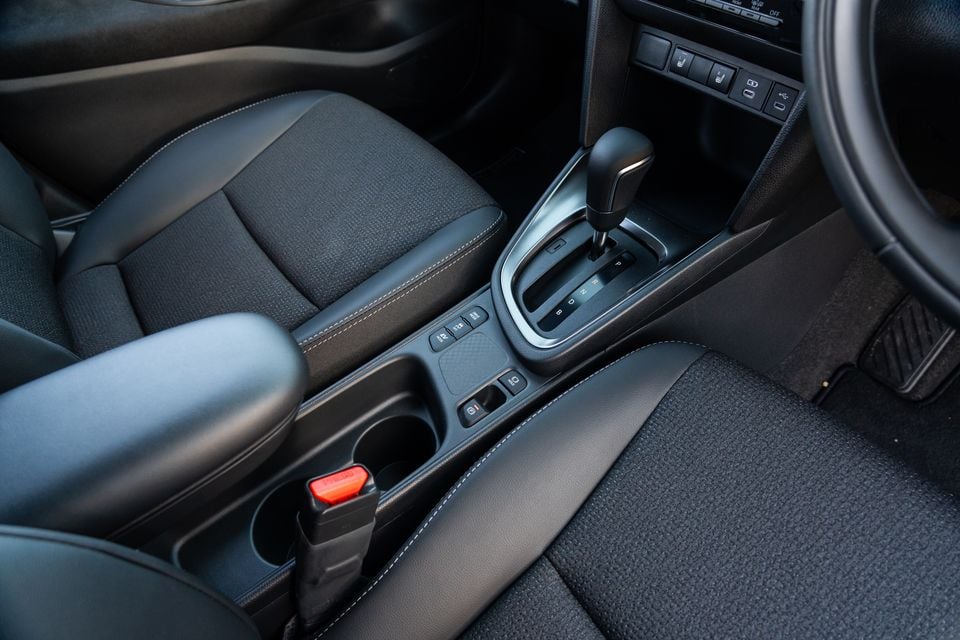
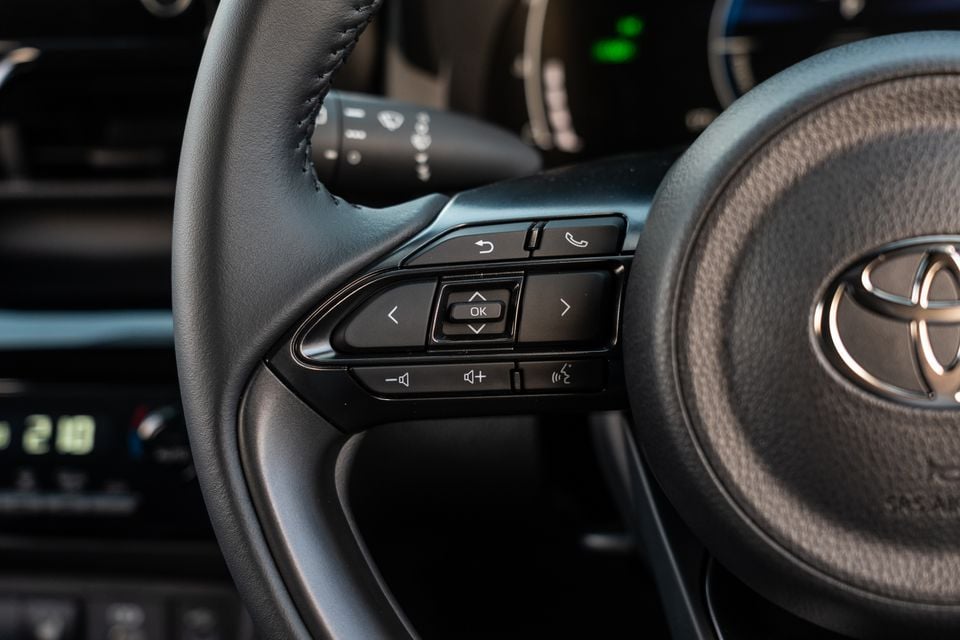
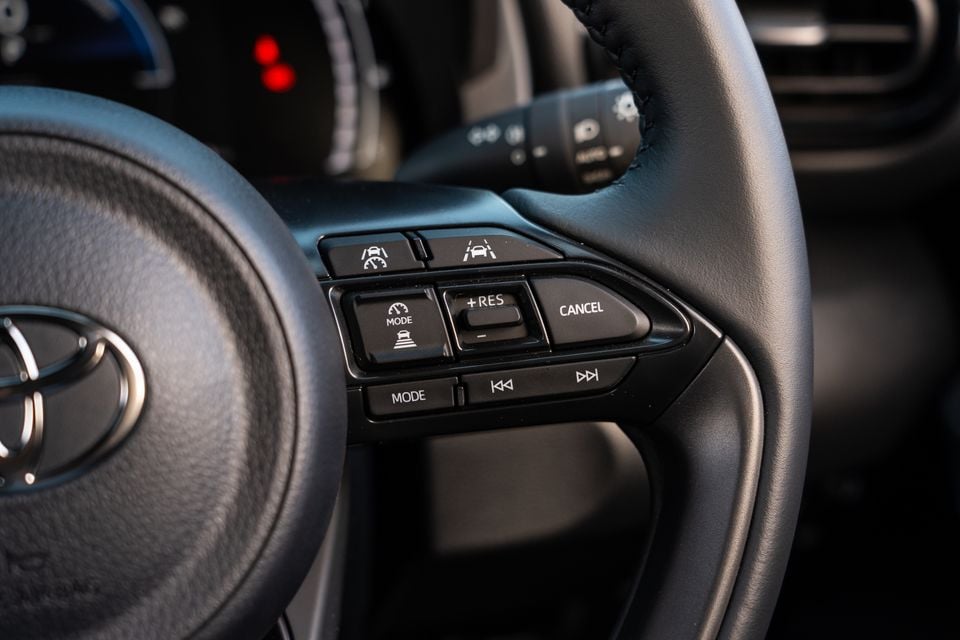
There’s a traditional auto shifter to your left knee, and an attractive leather-wrapped steering wheel with physical shortcut buttons for the stereo and cruise control.
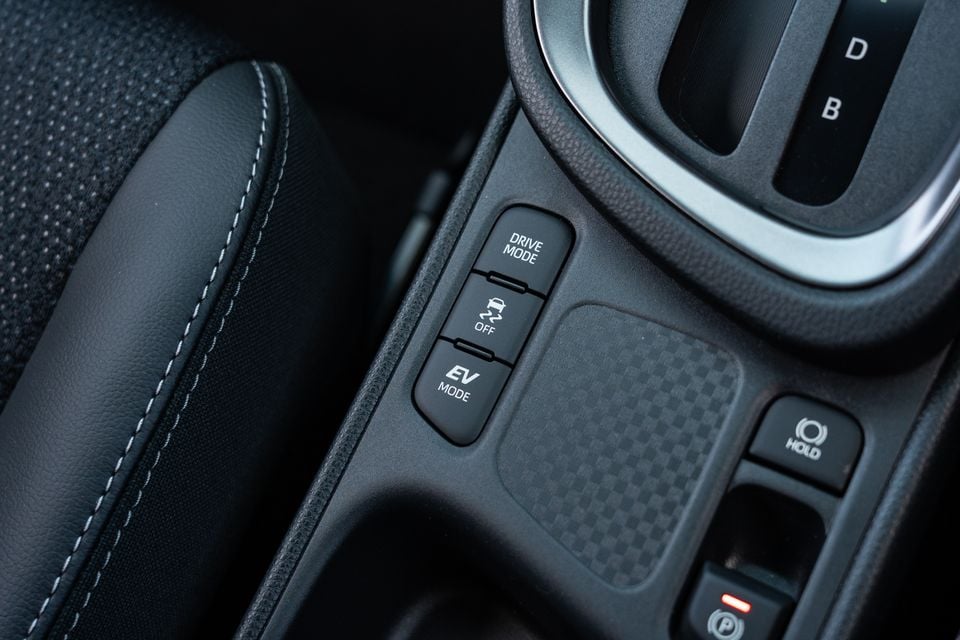
Curiously, instead of a low gear for hills or heavy loads – as with a typical PRNDL pattern – the drive selector can be shifted past Drive into ‘B’, which prioritises battery regeneration.
Drivers can also choose between Eco, Normal, and Power modes, depending on how the Yaris Cross is being used. Which seems a bit superfluous.
Ahead of the driver is a 7.0-inch ‘multi information display’ screen sandwiched between coolant temperature and fuel gauges. A head-up display projects basic information like vehicle speed onto the windscreen, just below your eyeline.
One of the more jarring things I noticed when jumping into the Yaris Cross for the first time was the 8.0-inch infotainment touchscreen. While I’m in no doubt that it’s aligned squarely, because of the relatively aggressive curve of the dash on the passenger side, it creates an optical illusion that makes it seem as if the ‘floating’ touchscreen is angled away from the driver.
However, the user interface of the infotainment isn’t great, and the screen’s small size means wireless Apple CarPlay can be a bit crowded if using the split-screen view.
Below the infotainment screen is an LCD for the single-zone automatic climate control, complete with knobs for both temperature and fan speed. There are also two large buttons for the seat heaters, two USB-C charging points, and a 12-volt outlet hidden in the cubby.
The Yaris Cross has an okay amount of storage space up front, though I did have to go fishing for my wallet that got lost in the oddly-shaped door pocket.
The electric parking brake automatically comes on or off if you put it in Park or Drive, and there’s an EV Mode button if you want to avoid having the engine burst into life while exiting your driveway at an unsociable hour.
Practical, right? Real, honest-to-goodness buttons for almost everything, stalks for the windscreen wipers and indicators, uncomplicated instruments, and controls that make sense.
The quality of plastics fitted inside is mixed – being good where it counts, like on touchpoints, and cheaper in areas like the kick panels. Everything feels very well screwed together, though, and it doesn’t feel like Toyota has taken any shortcuts during manufacturing.
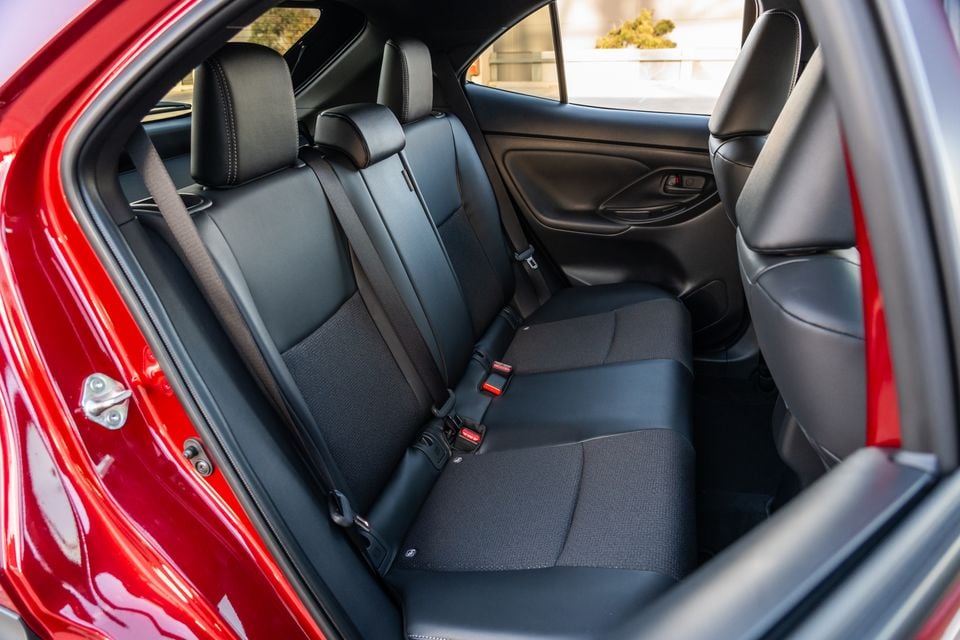
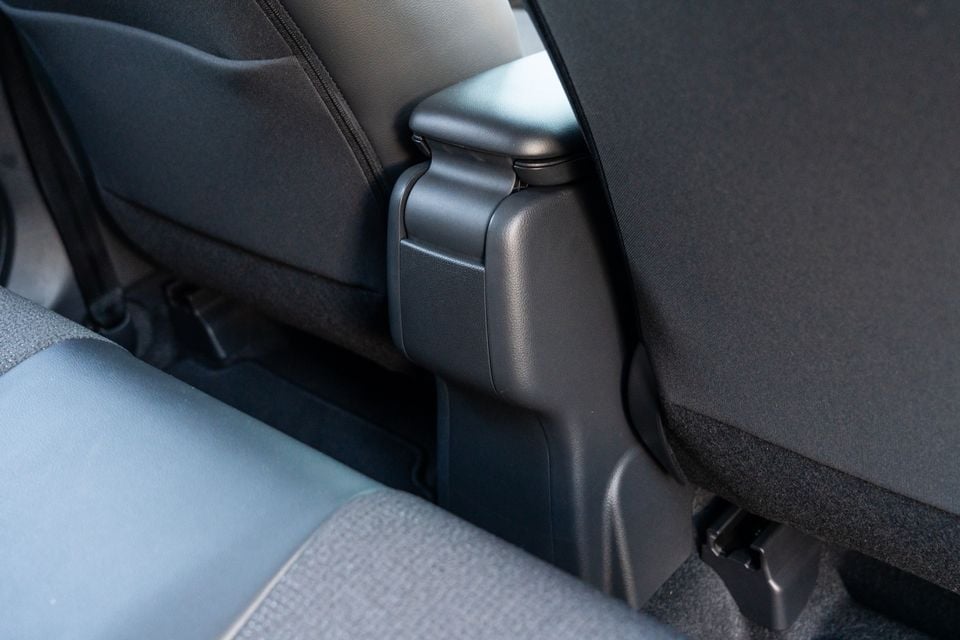
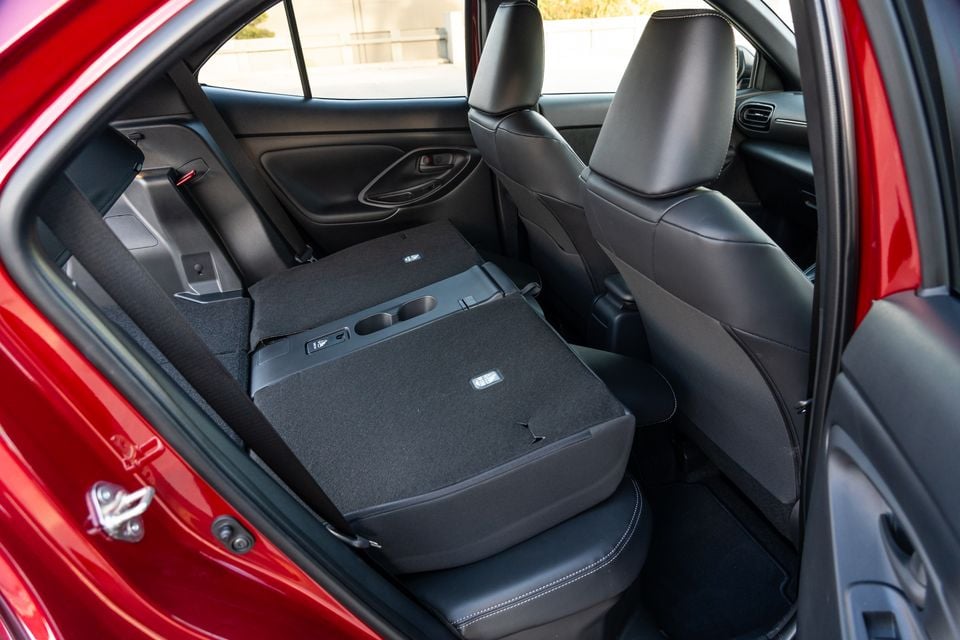
Further back, the second row of seats offers about the minimum amount of space for two adults without being cramped – though it’s probably best suited for picking the kids up from school, rather than big road trips.
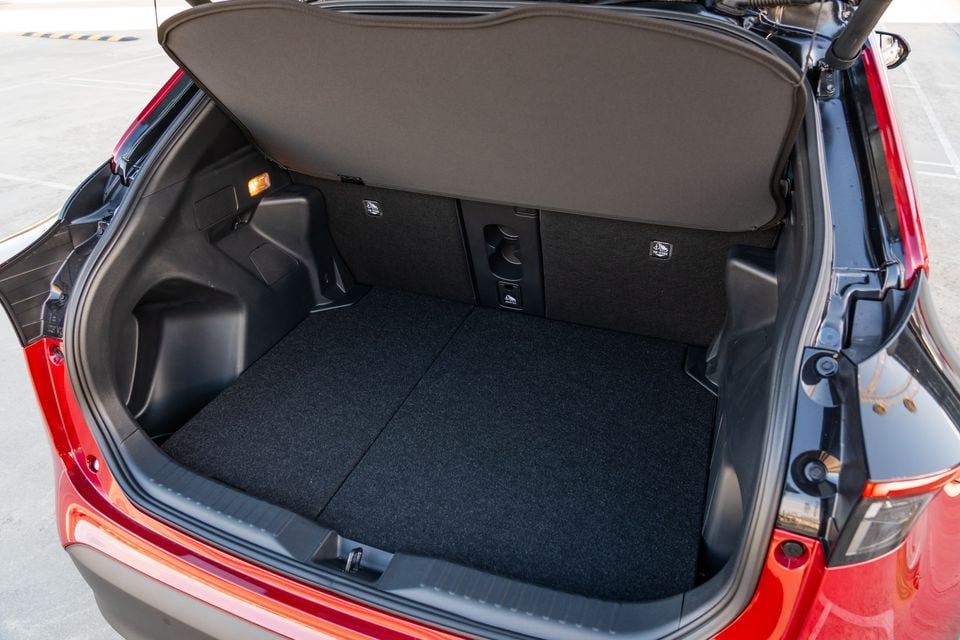
Even further back is a 390-litre boot, which won’t be enough for any Ikea addicts out there, but can carry a couple of suitcases and the weekly shop. The rear seats do fold down in a 60:40 split if you need to increase storage capacity.
| Dimensions | Toyota Yaris Cross Hybrid |
|---|---|
| Length | 4180mm |
| Width | 1765mm |
| Height | 1590mm |
| Wheelbase | 2560mm |
| Cargo capacity | 390L (5 seats) |
To see how the Toyota Yaris Cross lines up against the competition, check out our comparison tool
What’s under the bonnet?
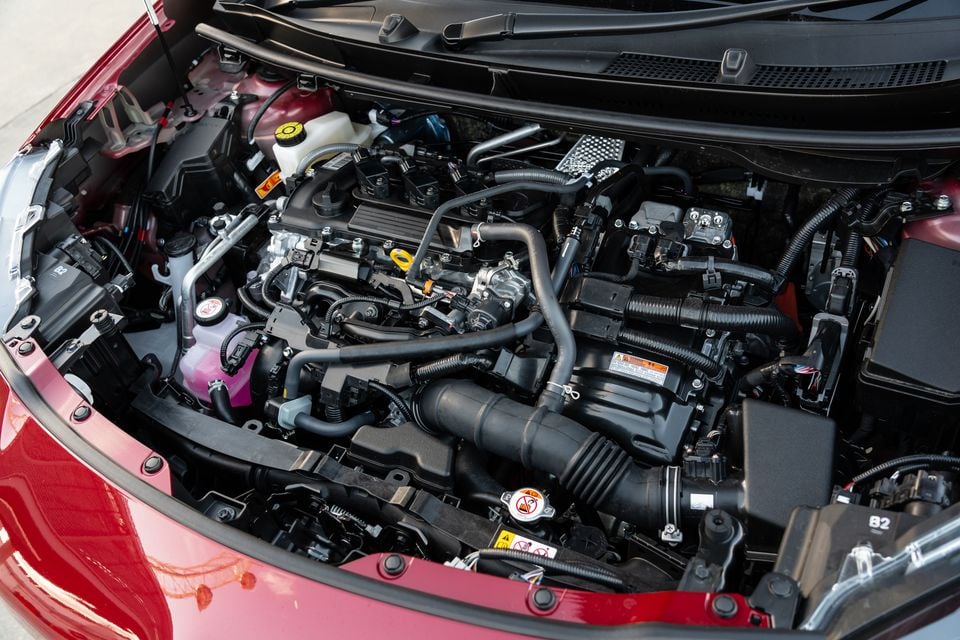
Powering the little Yaris Cross is a 1.5-litre non-turbo three-cylinder petrol engine making a paltry 67kW of power and 120Nm of torque on its own – however, those aren’t the numbers that matter, as performance is boosted thanks to hybrid technology.
| Specifications | Toyota Yaris Cross Urban 2WD hybrid |
|---|---|
| Engine | 1.5L 3cyl petrol |
| Engine outputs | 67kW/120Nm |
| Electric motor outputs | 59kW/141Nm |
| System outputs | 85kW |
| Battery | 4.3Ah lithium-ion |
| Transmission | e-CVT |
| Drive type | FWD |
| Weight (kerb) | 1235kg |
| Fuel economy (claimed) | 3.8L/100km |
| Fuel economy (as tested) | 4.5L/100km |
| Fuel tank capacity | 36L |
| Fuel requirement | 91-octane regular unleaded |
| CO2 emissions | 86g/km |
| Emissions standard | Euro 5 |
| Braked tow capacity | 400kg |
The hybrid system consists of a 4.3Ah battery feeding a 59kW/141Nm electric motor, increasing its combined output to 85kW. Toyota doesn’t advertise the combined torque output.
Drive is sent to the front wheels through a continuously variable automatic transmission (CVT).
CO2 emissions are rated at 86g/km, while the combined fuel consumption is an equally impressive 3.8L/100km. Our time with the car resulted in 4.5L/100km, which is 18 per cent more than the advertised figure – but, really, less than one litre of fuel per 100km isn’t going to bankrupt anyone.
To see how the Toyota Yaris Cross lines up against the competition, check out our comparison tool
How does the Toyota Yaris Cross drive?
Perhaps my expectations were lower than they should have been, but the Yaris Cross was a delight to drive over a week of testing.
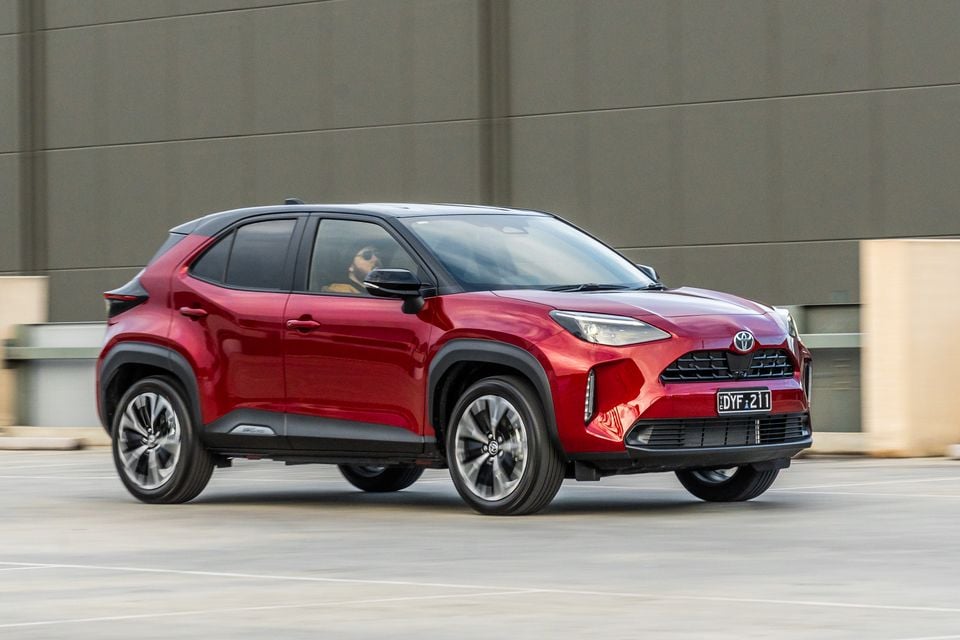
The little Toyota isn’t rewriting the book on driving dynamics, and isn’t going to light your hair on fire with outright performance. What it does do is offer a simple, uncomplicated driving experience, but in a way that is smooth and sorted.
Firstly, the powertrain. The hybrid engine is never jerky, always switching between electric and petrol power seamlessly, and helped by the CVT automatic. I’m not usually much of a fan of CVTs, but in this application it works really well.
The vehicle’s performance figures sound dismal, but it doesn’t translate to a dismal experience in the real world. Thanks to the instant torque from the electric motor and the near-infinite gearing of the CVT, the Yaris Cross gets up to speed well enough, and without the feeling that you’re wringing its neck.
During hard acceleration or on steep ascents, when neck-wringing was required, I did find the noise from the three-cylinder engine to be a bit gruff. It’s not an especially refined sound, but it’s also not something that comes to the fore in most driving scenarios.
While my colleagues have had issues with the noise insulation of the Yaris Cross in the past, I don’t share those complaints. I’m unsure whether it’s because this is the higher Urban grade that gets more insulation or thicker/different materials, or if Toyota has made adjustments to its manufacturing after feedback from owners and reviewers. Or perhaps my expectations were just lower because this is a city-focused SUV and isn’t claiming to offer a luxury experience.
Having said that, I did have a head cold for most of my time with the Yaris Cross, so it’s entirely possible that my ears were partially blocked and shielding me from the external din, and the vehicle is as loud as the engine room of a cruise ship while zipping down the Eastern Freeway.
Speaking of, highways were one area where the little SUV surprised me. Smaller cars tend to excel in city and urban environments, but can find themselves overwhelmed when out on the open road. That wasn’t the case here, with the Yaris Cross continuing to deliver a smooth and confident drive at higher speeds.
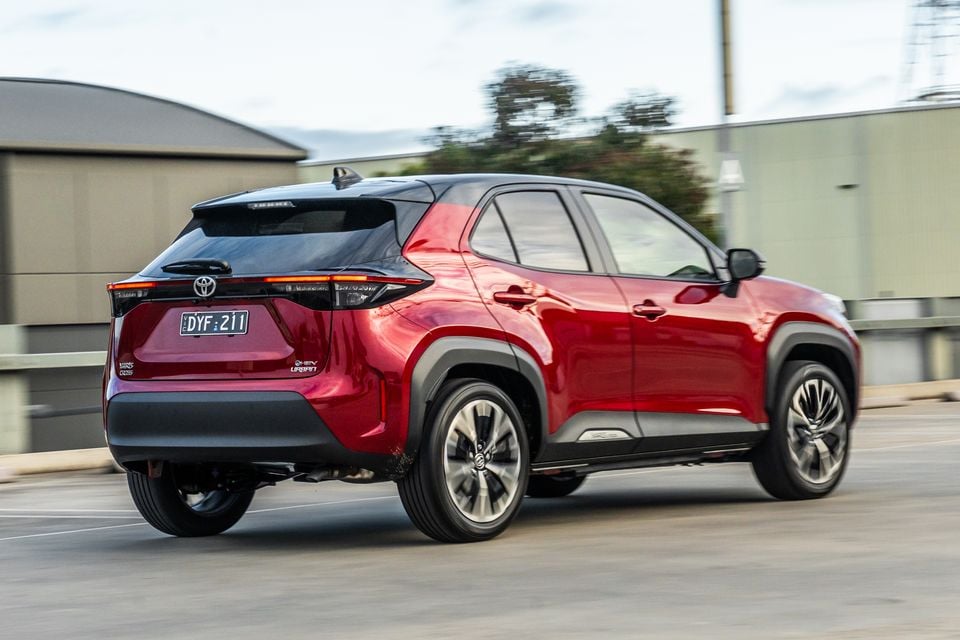
Its competence on motorways also doesn’t come at the expense of city driving. The vehicle is nimble, easy to place on the road, and makes parking a breeze. While it gets the job done, the 360-degree camera is of poor quality, and feels like Toyota is taking the mickey.
I also wasn’t impressed with outward visibility. While the continual improvements to vehicle safety requirements are a positive thing for the driving public, it does mean smaller window apertures and encroaching pillars can reduce sightlines, making the driver more reliant on the camera and sensors during parking.
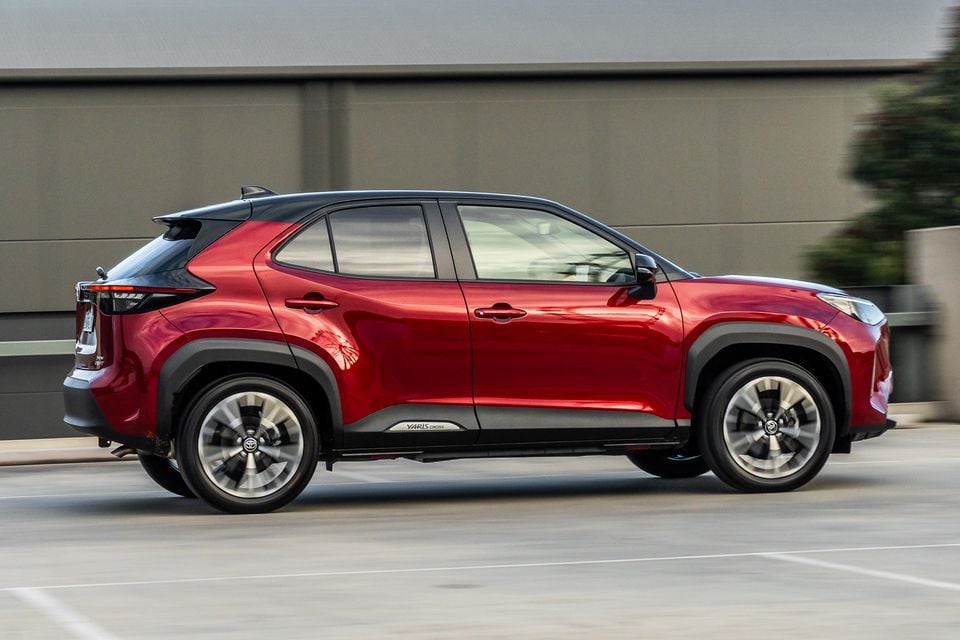
However, the ride ended up being a pleasant surprise. Vehicles with shorter wheelbases can buck like a horse when hitting undulations in the road or when driving over speed humps. The Yaris Cross offered a good ride, though – communicating any road imperfections without sending shockwaves up the driver’s spine.
From expert reviews to the right deal
CarExpert brings together reviews, research tools and trusted buying support, guiding you from research to delivery with confidence.
Steering is well-balanced. I’ve written before about the current industry trend of tuning electric power steering until it’s lighter than helium, but that isn’t the case here. It’s direct without being darty, but has quite a good ratio for city driving and parking.
Equally, the brakes were really nicely weighted. At no point did the Yaris Cross feel like its brakes were overly strong, as can sometimes be the case with hybrid models equipped with regenerative braking.
Thankfully, the Advanced Driver-Assistance Systems (ADAS) only ever piped up when there was actually something I needed to be aware of, and kept quiet the rest of the time.
To see how the Toyota Yaris Cross lines up against the competition, check out our comparison tool
What do you get?
Despite being the entry-level model in Toyota’s SUV lineup, the Yaris Cross comes with a good amount of kit out of the gate.
2026 Toyota Yaris Cross GX Hybrid equipment highlights:
- Halogen headlights
- Automatic high-beam
- LED tail-lights
- Electronic parking brake
- 16-inch alloy wheels with 205/65 R16 tyres
- Space-saver spare (tyre repair kit with AWD)
- Power-folding exterior mirrors
- Toyota Connected Services
- 7.0-inch central digital instrument cluster
- 8.0-inch touchscreen infotainment system
- Wireless Apple CarPlay and Android Auto
- DAB+ digital radio
- Cloud-based satellite navigation
- Six-speaker sound system
- 2 x USB-C outlets
- Cloth seat upholstery
- 40/20/40-split/folding rear seatbacks
- 3 x rear ISOFIX and 2 x top-tether child seat anchor points
- Leather-accented steering wheel
- Tilt and telescopic steering wheel adjustment
- Illuminated vanity mirrors
- 2 x rear grab handles
- Centre console with soft armrest
- 2 x front and 2 x rear cupholders
- Automatic climate control
- Keyless entry and start
- Heated exterior mirrors
The GXL adds:
- LED headlights
- LED reversing lights
- Rear privacy glass
- Front and rear parking sensors
- Front and rear parking support brake
- Blind-spot monitoring
- Safe exit assist
- Surround-view camera
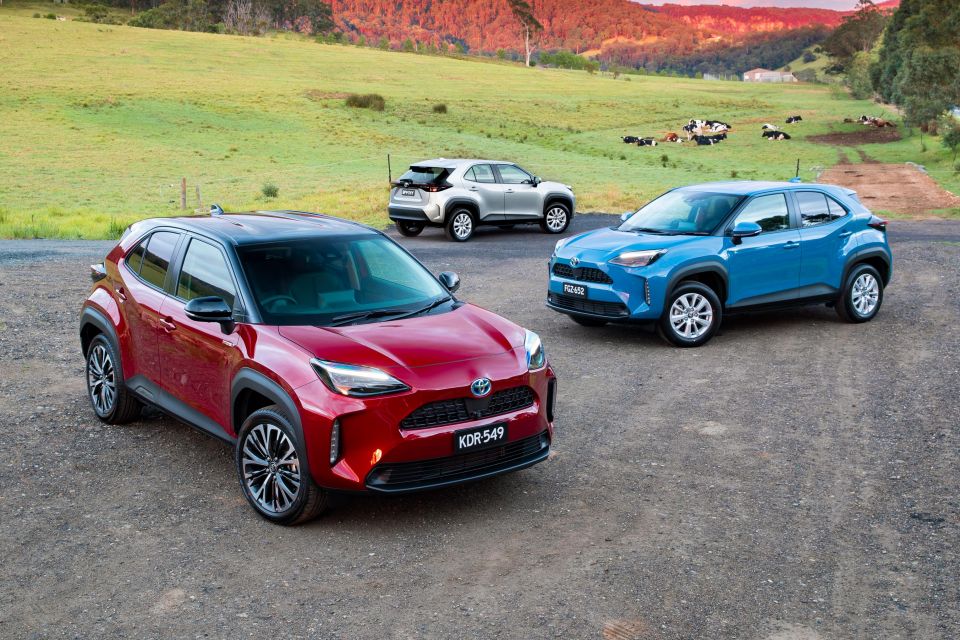
The Urban gains:
- 18-inch alloy wheels with 215/50 R18 tyres
- Leatherette upholstery
- Power driver’s seat
- Heated front seats
- Hands-free power tailgate
- Head-up display
Over the GXL, the GR Sport gains:
- 18-inch alloy wheels with Falken Azenis FK510 tyres
- GR Sport front and rear bumpers
- Black mirror caps
- Red brake calipers with GR logo
- GR Sport suspension
- Leatherette and suede front sports seats
- GR-emblazoned steering wheel and headrests
- Aluminium pedals
To see how the Toyota Yaris Cross lines up against the competition, check out our comparison tool
Is the Toyota Yaris Cross safe?
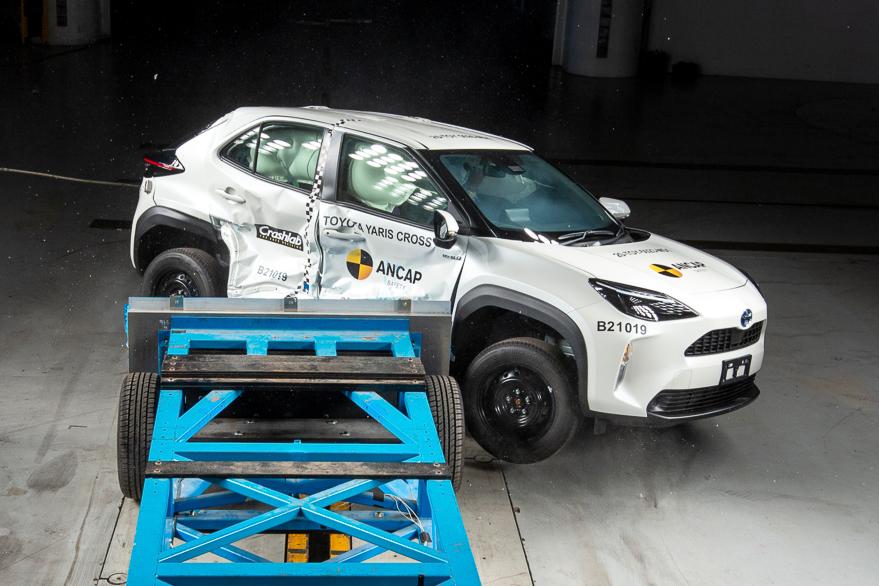
The Toyota Yaris Cross was awarded a five-star safety rating by ANCAP – Australia’s independent crash-test authority – back in late 2021, so that’s set to expire in December 2027.
| Category | Toyota Yaris Cross |
|---|---|
| Adult occupant protection | 86 per cent |
| Child occupant protection | 86 per cent |
| Vulnerable road user protection | 78 per cent |
| Safety assist | 82 per cent |
The Yaris Cross scored particularly well for occupant protection, though wasn’t quite as strong for vulnerable road-user protection – referring to pedestrians and cyclists.
Standard safety equipment includes:
- Autonomous emergency braking
- Pedestrian
- Daylight cyclist
- Motorcyclist
- Oncoming vehicle
- Intersection collision avoidance
- Emergency steering assist
- Low-speed acceleration suppression
- Adaptive cruise control
- Lane trace assist (lane-centring)
- Traffic sign recognition
- Reversing camera
- Blind-spot monitoring
- Safe exit assist
- Parking support brake
- Low-speed acoustic alert system
- Front and rear parking sensors
GXL adds:
All Yaris Cross variants come with eight airbags – dual front, driver’s knee, front centre, front side, and full-length curtains.
To see how the Toyota Yaris Cross lines up against the competition, check out our comparison tool
How much does the Toyota Yaris Cross cost to run?
Toyota backs its new cars with a five-year, unlimited-kilometre warranty, with the hybrid battery covered by a 10-year, unlimited-kilometre warranty.
| Servicing and Warranty | Toyota Yaris Cross |
|---|---|
| Warranty | 5 years, unlimited kilometres |
| Roadside assistance | 7 years (conditional) |
| Service intervals | 12 months or 15,000km |
| Capped-price servicing | 10 years or 150,000km |
| Average annual service cost | $482 |
| Total capped-price service cost | $4818 |
However, the warranty for the engine and driveline can be extended for an additional two years if the vehicle is serviced through Toyota’s dealer network.
It’s a similar deal with roadside assistance, with five years of coverage that can be extended for up to seven years if serviced by Toyota.
The Japanese automaker provides up to 10 years of capped-price servicing, based on 12-month/15,000km intervals – with the first five services costing just $275 per visit.
To see how the Toyota Yaris Cross lines up against the competition, check out our comparison tool
CarExpert’s Take on the Toyota Yaris Cross
I didn’t expect to like the Toyota Yaris Cross Urban as much as I did.
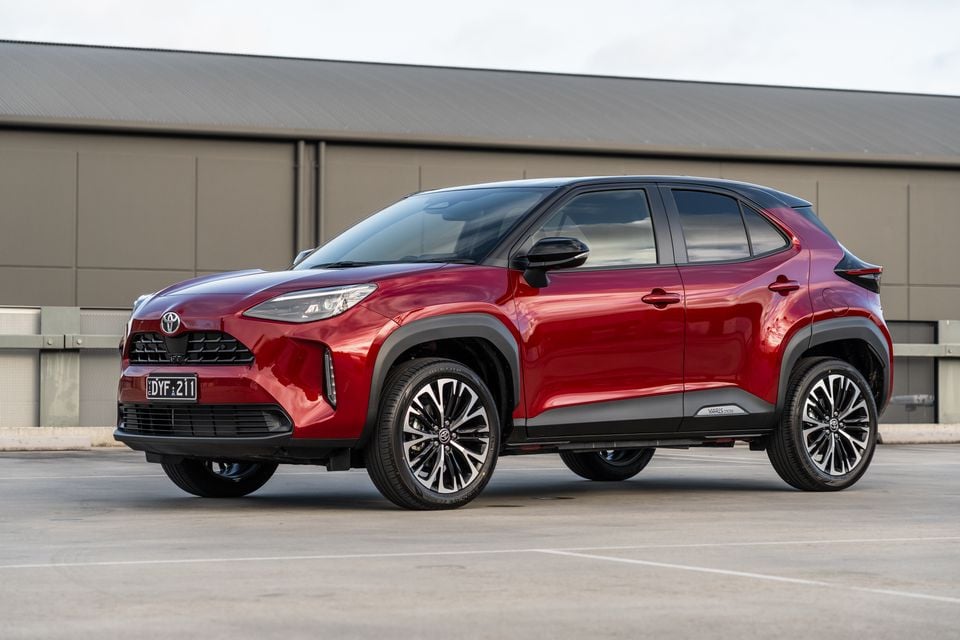
My enjoyment of the little SUV may well have had something to do with the head cold I had during my time with it, because it made life pleasant by just being easy and relaxing.
It still has plenty of modern technology, good safety credentials, and plenty of features, but the headline here is the way the driver interacts with the car.
Jumping in, driving it without thinking, finding the appropriate volume or temperature knobs without taking your eyes off the road… it completely takes the stress and discomfort out of commuting.
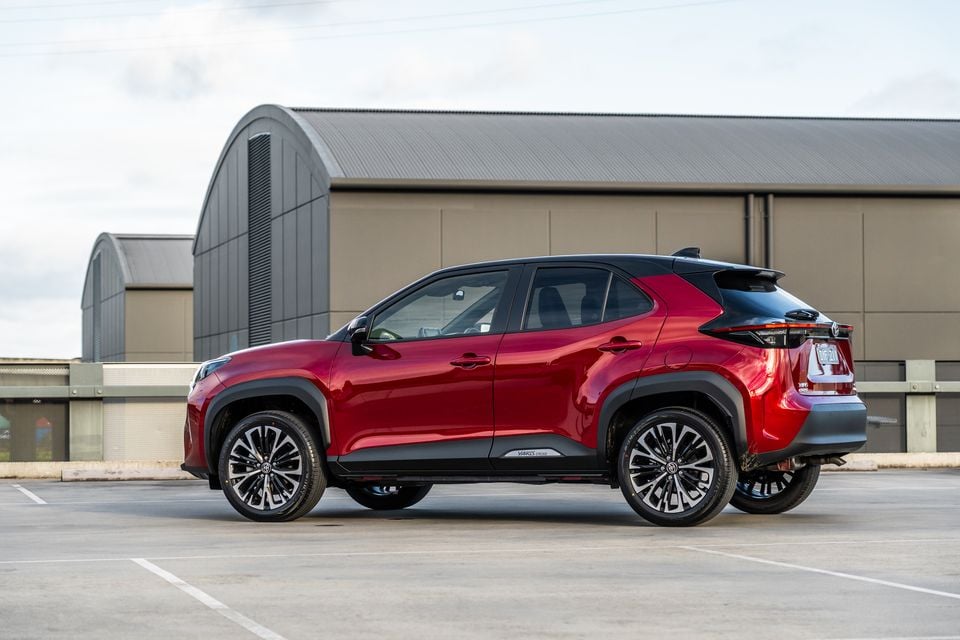
Toyota hasn’t tried to reinvent the wheel or do anything flashy here; it’s just stuck to the recipe and focused on executing it well. At first glance, it may seem antiquated in some ways, but it’s actually an antidote to the complicated spaceships entering the market.
In fact, the more I drove the Yaris Cross, the more I thought it would be a perfect car for new drivers, retirees, and those with physical disabilities. It’s easy to get into, easy to drive, easy to control, easy to park, and easy to get out of.
While other automakers are rushing headfirst into the future, Toyota still has at least one car available that caters to buyers wanting simplicity more than anything else.
It’s the answer to the question I get asked constantly: “Is there a new car out there that is just a car?”
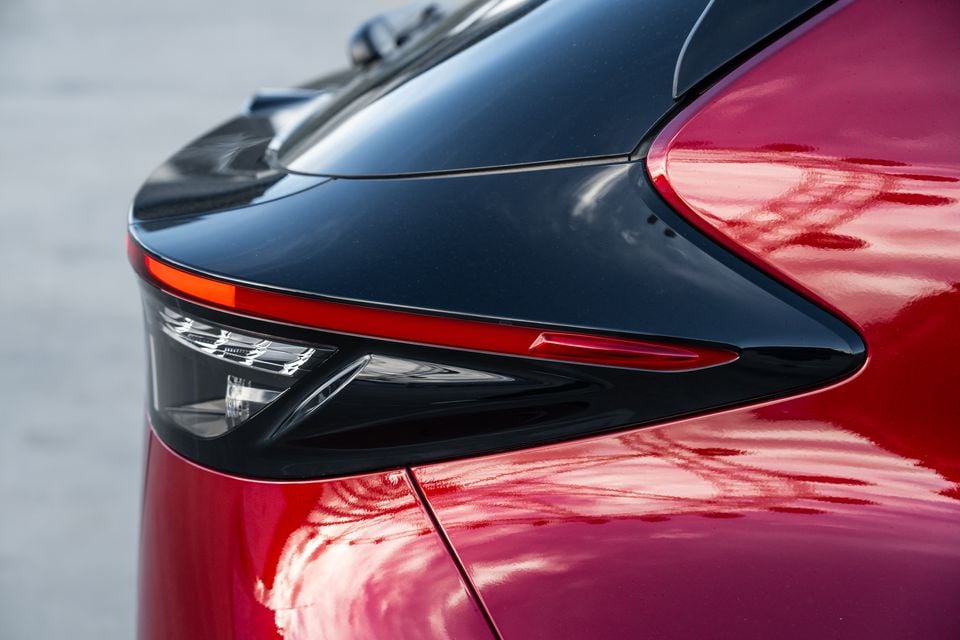
The automotive industry seems obsessed with the latest design and tech, even if it’s to the detriment of safety – but Toyota’s smallest SUV is almost the opposite of that. Part of its safety comes from its predictability, and it doesn’t leave behind people who may not be completely au fait with technology.
That said, the Yaris Cross can be enjoyed by everyone for what it is: a well-executed, uncomplicated commuter car.
CarExpert can save you thousands on a new Toyota Yaris Cross. Click here to get a great deal
Click the images for the full gallery